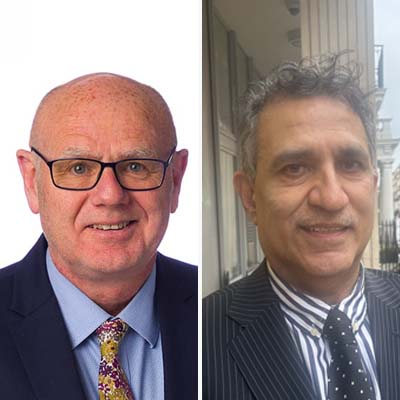
BDA Chair Eddie Crouch on BBC Breakfast.
In recent days we have had little choice but to spell out the facts to the press and to Parliament: there is now a material risk of this Government failing to deliver on its promise to save NHS dentistry.
We need real commitment and proper investment. But with the current ‘psychodrama’, we are not getting either. This feels like a make-or-break moment.
Here's what you need to know.
New faces, old problems
It’s June, and we were expecting to be in the thick of a public consultation on fundamental reform of NHS dentistry.
In April, Ministers told Parliament this consultation was coming "before the summer." This month, its arrival time has been downgraded to "in due course."
Wes Streeting is gone. And the Labour Party now seems on the cusp of a leadership election.
This has real and potentially lasting consequences for dentistry.
If we don’t have the leadership to spell out the government’s ambitions, and the necessary resources from the Treasury to underpin them, then progress is impossible. All we’ll get is more dither and delay.
There’s only so long struggling NHS practices can wait, before they cease to be NHS practices.
We were the first organisation to meet Wes Streeting upon his appointment as Health and Social Care Secretary. It was a bold statement of intent. Yet nearly two years on we’ve seen tweaks but not the decisive break we need.
We’ve seen tweaks but not the decisive break we need.
Consultations are one thing, but responses, resources, legislation and implementation all take time.
And the clock is ticking on promises to make change happen in this Parliament. Any later, and there won’t be a service left to save.
Blast from the past
It's now 17 years since Wes’s predecessor and now likely opponent Andy Burnham accepted the recommendations of the Steele Review, which outlined where reform should head.
The only major change 17 years later is that this service has ceased to exist for millions.
With all eyes on the Makerfield byelection, we worked with our friends at 38 Degrees to look at how dentistry is playing on the doorstep.
Two thirds of voters are deeply concerned about their ability to access affordable care. It's easy to understand why - the public face both an access crisis and a cost-of-living crisis.
This is now a real election issue. But this isn’t about the fate of Andy Burnham – it’s about millions of patients all across this country.
It will be familiar to almost every community, but we spoke to every practice in the Makerfield constituency, and not one was taking on new adult NHS patients.
If you want NHS care, the only place where you might stand a chance is if you were sentenced to do time at the local prison, HMP Hindley.
The problem isn’t private dentistry, it’s government
The fact is that millions make a positive choice to go private.
But many have felt forced to do so or simply gone without the care they need as a direct result of political choices made at the Treasury and the Department of Health.
We’ve been back on the red sofas for the second time in a week, this time to correct claims of surging prices. We’ve looked hard at the evidence from across the country, and we’ve not found evidence of price gouging. But there’s plenty for savage cuts in NHS spending. And that’s what’s left millions with few options.
It is not rocket science
Government is yet to meet words with action when it comes to giving NHS dentistry a future.
We haven't seen a penny of new investment, and the public are paying the price.
Amid this backdrop, we secured a major debate in Parliament on 15 June.
We’d like to thank the hundreds of members who shared their stories with their MPs, many of which were cited in the Commons Chamber. As expected, we got little sense of this Government’s ambition. The Minister spoke of “matching resources to need”. That doesn’t translate as providing resources to meet the millions with unmet need for care, it smacks of recycling the same financial envelope.
And on pacing, we had more of the same. “We are not rushing these changes,” said Mr Kinnock. Well, that’s certainly hard to dispute.
But what we saw was clear, and cross-party consensus. That we need what is so obviously missing: pace and resources to decisively turn the page on the Unit of Dental Activity (UDA).
Conservative MP Simon Hoare was concise. “It’s not rocket science,” he said.
“The core of the issue is to try to make NHS dentistry more attractive, and the best way to do that – please forgive the pun – is a root-and-branch reform of the contract to ensure that it pays?”
As Labour’s Mary Kelly Foy MP stressed, “tweaks to the existing system cannot become a substitute for fundamental reform. We need a clear timetable for formal negotiations on a new dental contract, a deadline for replacing UDAs in this Parliament, and proper funding, so that practices do not lose money for providing NHS treatment.”
At a time of huge public spending pressures, Labour’s Mark Sewards MP stressed the fiscal rules should not be an obstacle. “We have heard some sources cite £1.5 billion to fix dentistry” he said, “I think that is a very reasonable figure to consider finding”.
Lib Dem spokesperson Helen Maguire MP offered a clear diagnosis. “With a new defence secretary, a by-election, a potential leadership contest and possibly a new prime minister, this Government are clearly distracted,” she said. “Those distractions cannot be allowed to delay reform of the contract.”
MP after MP cited our concerns, and paid tribute to the BDA’s tenacity.
It was a vital opportunity to spell out the very real obstacles to reform, and the lasting consequences if Government promises are not translated into action.
This Government is distracted, but we are not.
The central question is no longer whether NHS dentistry needs reform.
The question is whether the political system is capable of delivering it before public confidence, professional morale and patient access go to the wall.