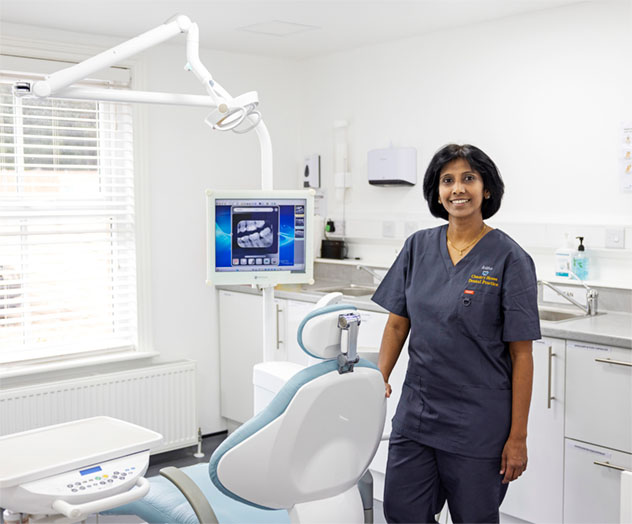

This week the Health Minister Stephen Kinnock announced a huge expansion in exam capacity for internationally educated dentists, to allow more to register with the GDC. He talked of how this would allow more dentists to practise and put more patients in dental chairs. But is it that straightforward?
Addressing the GDC waiting list
There is certainly a large backlog of dentists wanting to register via these exam routes. At the turn of the year around 7,000 dentists were on the GDC’s waiting lists, many of them have been waiting for years to get registered and have been poorly treated by a frustrating process which has not been fit for purpose, , including the problematic process for exam place allocation. They will welcome the news of more places being made available, and the announcement will also be of real interest to those practice owners who have been struggling to recruit dentists over recent years.
The proposed tenfold increase in capacity for the Licence in Dental Surgery (LDS), coupled with expansion in the Overseas Registration Exam (ORE), will see a dramatic shift in the make-up of dentists on the GDC register. For some time, the UK has relied heavily on dentists who have qualified overseas. In 2024, the last year for which statistics for annual GDC registration have been published, 31% of all registered dentists, and 47% of new additions, were overseas-qualified. With the growth in exam places over the next two to three years, we could see total new joiners rise towards 3,500 per year with up to three quarters of new registrants qualified outside of the UK. There is some uncertainty around these numbers as these exam processes currently only apply to dentists trained outside the European Economic Area, with automatic recognition for European dentists continuing until 2028.
The UK has a lot to thank those internationally qualified dentists for. Without their contribution, the access crisis in NHS dentistry would be much worse. But this new expansion represents a significant gear change with implications in other parts of the system, and also sits uncomfortably with the UK Government’s broader plans to tighten immigration policy.
Wider government immigration policy
These changes, if introduced, will lead to longer and more uncertain routes to a life in the UK, including for dentists. Therefore, on the one hand, the Government is encouraging dentists to commit their own not insignificant resources to pass exams and deliver healthcare in the UK. On the other, they are intending to introduce significant constraints to a fulfilled and long-term life in the country. This signals a relationship based on exploitation more than trust and respect, with individual dentists caught in the middle of an incoherent approach.
The risk of this inconsistency is exploitation of vulnerable individuals, which is something we have seen before. In the mid-2000s, the then Labour Government tried to bring a large number of overseas-qualified dentists to the UK. While many followed this call and built a successful career, others found that expected support was unavailable and ultimately left them unable to practise in the UK. We cannot allow the same thing to happen again. Growth to the extent anticipated must be properly planned, and support needs to be in place to allow dentists coming to practice in the UK to thrive.
From exam places to independent delivery of NHS care
The ramping up of exam processes to deliver expansion at such scale is in itself quite a mission. But passing the ORE or LDS exam is only one step in a long journey for professionals who will be in an unfamiliar country working in unfamiliar systems.
When it comes to NHS care, that unfamiliarity is recognised by the need for such dentists to be assessed by the NHS about their skills, knowledge and experience. In most cases this will lead to educational agreements that will require a period of supported practice, as well as potential additional courses, to be accepted as an NHS performer.
This process is ultimately in place to ensure that overseas-qualified dentists have the necessary knowledge of protocols, regulations, and standards to work independently. If we are to see an increase in NHS dentists as a result of the exam expansion, we will also need an enormous capacity expansion for the NHS assessment process. Are there sufficient NHS practices willing and able to support more than double the number of dentists who will need to go through it?
Considering and mitigating risks of exploitation
As referred to above, we are sadly too familiar with stories of vulnerable dentists being exposed to exploitation when making their way through the performer list process. Most practices will undoubtedly offer a supportive environment, but there are exceptions, with examples of dentists being asked to pay significant fees and/or being paid at low rates and subject to unreasonable conditions during the process. At the extreme end, we have seen examples of overseas-qualified dentists tied into exploitative terms over several years, or of being held to ransom over their performer list sign-off or their visa. That sort of thing cannot be allowed to become the norm, but there will be risks as we see rapid expansion.
The dental community needs to offer support and this is one of the key reasons behind the BDA’s affiliate membership offer aimed at dentists qualified outside of the UK. Apart from access to significant resources for exam preparation and an understanding of the UK’s dental system, one of the most important parts of membership with us is a contract checking service to ensure fair terms. Beyond contracts and systems, there is a wider need to ensure that dentists new to the UK understand the expectations on them by patients and by practices, and the effects on a regulatory system that might be much stricter than in their country of origin.
Investing in the workforce but not the service
Alongside ensuring that there are not barriers in place discouraging new registrants from NHS work, we will also need to ensure that the funding is in place to enable such dentists to actually provide NHS care. It may seem perverse given long-standing NHS access issues, but certainly in England, we are now getting close to the point where the inadequate dental budget is being used up. Therefore, if there is to be significant additional NHS care provided by new registrants, it will require investment that the Government has so far been unwilling to provide. Otherwise, will there be NHS work for these dentists to perform? The Government is in danger of investing in workforce without investing in the service.
We have long-standing issues with failed, underfunded NHS dental systems. Why should dentists qualified overseas be any more willing to work in broken systems than their UK trained counterparts? We have used the analogy before that additional workforce without fixing systems is like filling a leaky bucket, and that is as appropriate here as it ever was. All roads lead back to meaningful NHS reform, underpinned by sustainable funding.
Expansion of dental student numbers in the UK
Whilst the contribution of overseas qualified dentists should be welcomed and appreciated, in the longer term it must be right for the UK to seek to reduce its reliance on an internationally trained workforce. In that context, the announcement this week included a welcome, although modest increase to UK dental student numbers – which will not start to impact until 2032.
The Minister talked about how he wanted to prioritise these 50 new undergraduate places towards so-called ‘dental deserts’ where access to care has been particularly problematic. By that, we take it to mean that these places will be concentrated in Portsmouth and the University of East Anglia, where new schools have recently been given educational approval by the GDC. It is an understandable approach, particularly given the political noise from many MPs seeing a dental school in their patch as an answer to access problems.
The evidence though is not strong that a local dental school results in more dentists in an area and better NHS provision. The two newest schools in the country, Peninsula and The University of Central Lancashire, are in areas with some of the biggest ongoing access issues. Graduates still tend to migrate towards urban environments and/or back to where they have roots rather than necessarily where they studied. Careful planning needs to take place if these new schools are to be part of the solution for better dental care in their local environments.
There must also be questions around whether a share of 50 new students will be sufficient to make those new schools financially viable and if there will be sufficient academic workforce to support the expansion.
UK workforce planning: Impact on the existing workforce
Whilst it may seem a distant concern given the current recruitment landscape; the UK Government must also keep its eye on the impact of this policy on the existing workforce. What the Government has not said this week is how long it intends to keep open the vastly expanded capacity in these international routes to registration. Is this a policy intended to clear the existing backlog of thousands, a quick fix to alleviate a bottleneck? Or is this a longer-term strategic approach?
The potential is there for the vast expansion of international routes to simply encourage an almost perpetual topping up of waiting lists. The sizeable dental school industry in countries such as India, with the encouragement of commercial UK interests, will see this as an ongoing opportunity.
We need to be careful that we do not get to a point where we are training UK graduates who will ultimately be underemployed or unemployed. This could impact competition for work in the longer term. That may sound farfetched, but it is a problem that we have recently seen within the medical workforce, to the extent that the Government has decided that it needs to legislate to prioritise UK trained doctors for specialty training.
Of course we also need to think about the wider workforce requirements if we are to properly utilise the skills of an increasing number of registered dentists. Dentists cannot work without dental nurses and dental technicians, and we are already facing a shortage across the UK. Proper planning needs to follow if we are to match dentist growth. Later in the spring, we anticipate an updated NHS workforce plan. Whilst of course this is not just about the NHS, we will see if this addresses dental nursing, an issue that was lacking from the previous Government’s plan back in 2023.
Seismic shift but much still to consider
This announcement represents something of a seismic shift in approach to the dental workforce. We have seen practices struggling to recruit dentists, patients struggling to access NHS care, and dentists struggling to get through flawed registration processes. This announcement could well contribute to alleviating some of those constraints, but we need to ensure that this upscaling is well planned, and delivered with respect to the dentists involved.
If the impact is to be felt in NHS provision, the Government needs to recognise that it still needs to invest and reform. Or this will end up as a quick fix taking us no further forward.