Government’s move to force practices to deliver a minimum level of urgent and unscheduled care is wrong in principle and ignores the reality that demand for these treatments is not one size fits all.
We have worked hard to ensure the level mandated is at a place most practices could tolerate. 8.2% of contract value will be allocated to urgent care. This equates to 11 courses of treatment (CoTs) per £10,000 of contract value. For a typical practice with an NHS contract of around £300,000 this would translate to seeing six urgent appointments per week.
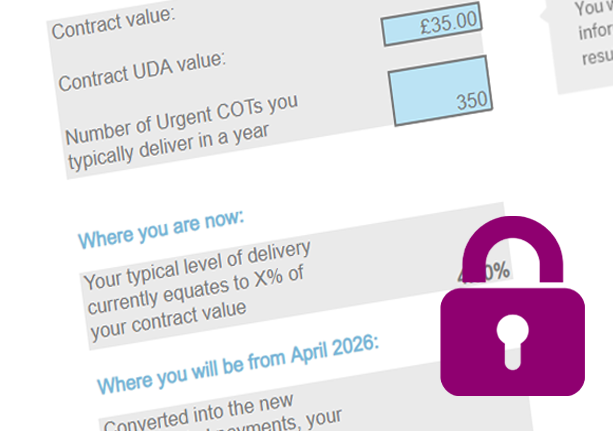
We have developed advice on what the unscheduled care mandate means for you, that is open to members and non-members for a limited time where you can find further information. We have also developed a calculator for members, to help practices understand the impact.
There remains potential that practices could face financial penalties for failure to hit urgent care targets simply because local demand does not exist.
“Mandating a minimum level of urgent care on practices is overreach,” says General Dental Practice Committee Chair Shiv Pabary. “By their very nature these treatments are demand-led.”
“Your dentist has no control over when the next patient breaks a tooth or develops an abscess, and if demand isn’t there, they could pay the price.
“We’ve fought for a level that feels manageable, but this is the wrong approach.”
The payments for these CoTs will change. Practices will receive £15 per mandated CoT. This will be credited to the contract monthly and will not be subject to clawback. Where the practice delivers the mandated CoTs then there will be an extra payment of £60 - bringing the full payment to £75.
Under the change the CoT will be for 'unscheduled care' rather than just 'urgent' treatment. Integrated Care Boards will have some flexibility to adjust the requirement for individual practices where there are exceptional circumstances.