
How an initial language barrier fine-tuned my patient communication
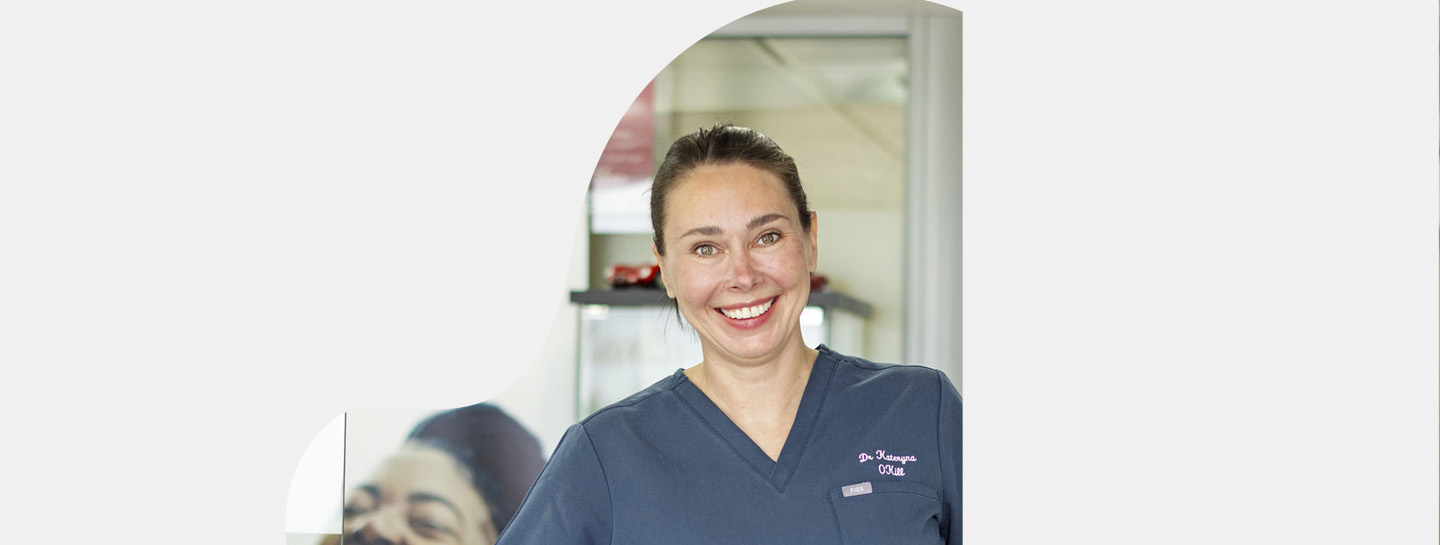
Kateryna O’Kill, Associate Dentist
Moving from Ukraine to the UK brought unexpected challenges, but finding the right support network, including the BDA, made all the difference.
Practising dentistry in the UK was never part of Kateryna O’Kill’s original plan.
“I was doing dental vocational training in Ukraine in 2002 when my friends invited me to join them on a European trip, saying it would be fun to travel and work abroad. The university I went to was in the same town I grew up in, and I was only 22, so it sounded amazing.”
Kateryna initially arranged six months off, and set out on her adventure.
“We visited France, Holland and the UK where I met my future husband, and he and I travelled together too. Then I worked here for a year as a dental nurse, and he encouraged me to start the process to be able to practise as a dentist.”
That process was a long one, but working in a dental practice at the same time helped enormously. Professional guidance and access to resources can make this process easier. Our advice provides practical support for dentists preparing for the Overseas Registration Exam (ORE) and adapting to UK standards.
“The multidisciplinary practice I worked at in London as a dental nurse was brilliant because I learned about the standards and regulations, and it helped me prepare for the ORE.”
Dentistry around the world
Like many dentists from overseas, Kateryna noticed cultural differences in dentistry.
“In Ukraine, the patients are more likely to tell you what they want, while in the UK, patients tend to expect dentists to tell them what they need.”
There were also differences in organisational structure.
“When I came here over 20 years ago, one thing that surprised me was how multidisciplinary dentistry was here. There was already a move into restorative surgical orthodontics and straightening teeth. At that time, in Ukraine you would go to a general dentist who would do extractions, and then there would be a hospital for more complicated procedures. So I was surprised when I worked with orthodontists in the UK who would need teeth taken out, but they would send the patients to the surgeon for the extraction rather than doing it themselves.”
Most aspects of dentistry in the UK, though, were already familiar to Kateryna through her training in Ukraine. Understanding these differences is essential to navigating UK regulations and clinical expectations with confidence.
“Academically, I would say the culture of dentistry in Ukraine is the same as in the UK, in that the focus is on the whole human, including the mouth as part of general health.”
Becoming a dentist in the UK had its challenges
An initial language barrier delayed Kateryna’s goals somewhat, but she kept going.
“English was not as widely spoken around the world 20 years ago, and the academic English writing component of the exams was hard for me. In fact, it took me two and a half years to get to the required level in English. It was not until 2009, after five years of studying, that I passed the ORE and qualified as a dentist in the UK.”
Looking back, those years were valuable for her personal growth.
“At the time I was so frustrated that I could not pass the academic English exam the first time, but I am proud that I never gave up. I really feel that my perseverance, and spending those years working as a dental nurse made me the dentist I am today.”
Turning an initial setback into improved patient care
Kateryna spent years having to speak simpler English than she wanted to, but it had an unexpected benefit.
“As I always used to struggle with academic English I have always spoken quite plainly, and I am good at describing things and drawing diagrams.”
Her language journey meant breaking down and analysing English, and reformulating sentences.
“Explaining complicated things simply is like a little puzzle for me, and it helps patients to make better decisions. My patients tell me that I explain complicated things well, and now they understand the concept.”
Giving clear and simple explanations turned out to be a key differentiator.
“We even get new patients who say they came because I explained something well to their neighbours. Good communication is what the whole practice is based on now, and I help other dentists explain their treatment plans in a simpler way that patients will understand.”
Being part of a community of overseas dentists can make you stronger
Starting off in a new country can be daunting, but Kateryna found a supportive network of people in the same position.
"When I was studying for the Overseas Registration Exam I had friends from Brazil and Poland,” says Kateryna.
Being in a group with other overseas dentists really helped with the practical elements of the exam.
“For the first aid training we practised chest compressions on pillows together, organised our own study clubs, and did mock assessments and exams.”
The group even made revision fun.
“We used to set the room up realistically like an exam hall, with one person pretending to be the examiner with a grumpy face! Then we went through the whole exam with difficult questions, and afterwards we would criticise each other’s treatment plans.”
Through our courses and events, overseas dentists can access lectures and connect with peers who understand the challenges of starting out in a new country.
Kateryna’s experience shows that perseverance matters but having access to trusted guidance and a professional community makes the journey smoother.
Advice for dentists coming to the UK today
Kateryna says one thing that can be tough is having to go back to the books and learn things that you may not be so interested in.
“Remember though, why you became a dentist in the first place; it is the best journey. I really like the direction in which UK dentistry is going, the technology and the teamwork. It is a beautiful profession to be a dentist, so don’t give up your dream.”
Having a variety of experts around you that know about different aspects of dentistry here is immensely beneficial for navigating your path, according to Kateryna.
“The BDA offers really fantastic support, especially if you are not in the country you grew up in. Once I had a specific question about the Mental Capacity Act so I called for one-to-one advice and the team helped me. I love the community and the library, and I often use the resources for various things around communication, safety, taking notes, and consent.”
Why join as an overseas affiliate?
Kateryna’s story shows that moving to the UK as a dentist can be challenging, but with the right support it is achievable and rewarding. If you are beginning your career in UK dentistry, overseas affiliate membership gives you access to expert advice, resources, and a supportive network to help you succeed.